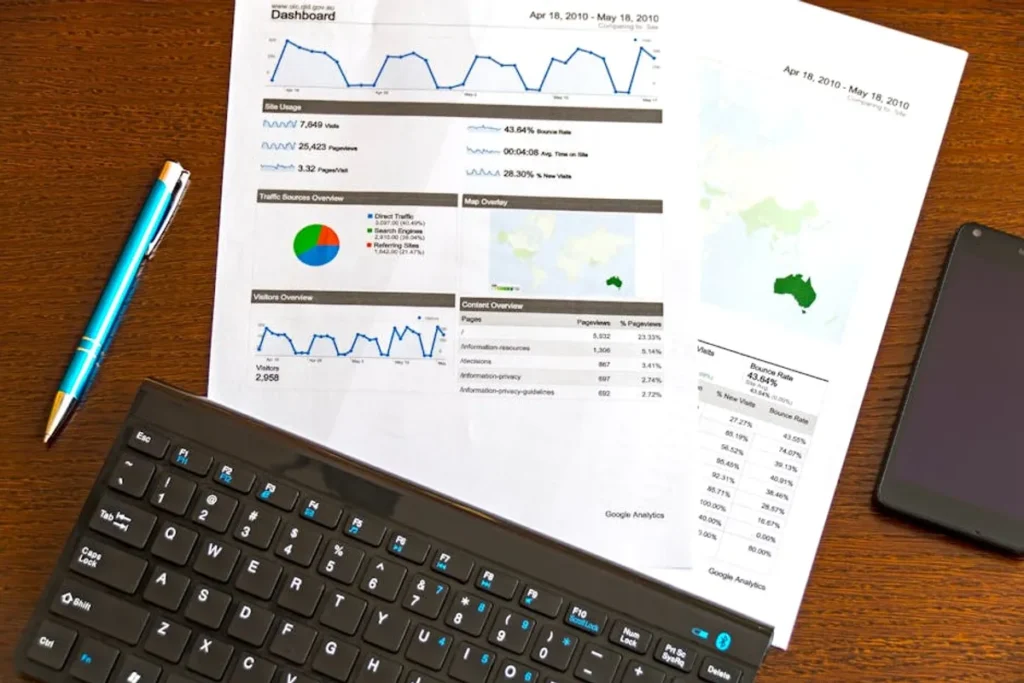
Monitoring keyword performance across Google Search and Google Maps is not a redundant exercise; it is a critical distinction for any business aiming to capture both broad organic traffic and hyper-local, high-intent conversions. While a strong position in Google's universal search results can drive brand awareness and informational traffic, visibility in Google Maps directly correlates with immediate transactional intent, especially for brick-and-mortar businesses or service providers. The user journey, ranking factors, and competitive landscape differ significantly between these two platforms, demanding distinct tracking methodologies and analytical approaches. Understanding these differences and implementing a dual-tracking strategy allows businesses to optimize for distinct conversion pathways, ensuring no valuable search opportunity is left unaddressed.
The Dual Imperative: Google Search and Google Maps
The fundamental reason to track keyword rankings in both Google Search and Google Maps lies in the divergent user intent each platform typically serves. A user searching "best running shoes" on Google might be in the research phase, comparing models and reading reviews. Their conversion journey is likely longer, involving multiple touchpoints. However, a user searching "running shoes store near me" directly in Google Maps, or triggering the local pack in universal search, is signaling immediate, geographically constrained intent. They are often ready to visit a physical location, make a purchase, or book a service. Ignoring one channel means missing a significant segment of your target audience at a crucial stage of their buying cycle. Understanding these differences will help you track local national and international rankings more effectively.
Understanding User Intent Differences
Google Search, particularly for non-local queries, often caters to informational or broad commercial intent. Rankings here reflect factors like content depth, site authority, technical SEO, and backlink profiles. Conversions might manifest as newsletter sign-ups, whitepaper downloads, or adding items to a cart for later purchase. Google Maps, conversely, prioritizes proximity, relevance, and prominence for local queries. Rankings are heavily influenced by Google Business Profile optimization, customer reviews, local citations, and the physical address relative to the searcher. Conversions here are typically direct: store visits, phone calls for appointments, or online orders for local delivery.
Tracking Organic Google Search Rankings
Effective tracking of organic Google Search rankings requires a systematic approach to monitor keyword performance over time, identify trends, and benchmark against competitors. This goes beyond simple position checks.
Manual Spot Checks vs. Automated Tracking
For a small, highly focused keyword set, manual spot checks can offer quick insights, though they are prone to personalization biases and are not scalable. The process typically involves logging out of Google accounts, using incognito mode, and potentially VPNs to simulate different geographic locations. However, for any serious commercial endeavor, automated ranking tracking platforms are indispensable. These tools regularly query Google for specified keywords, record positions, and provide historical data, allowing for trend analysis. They account for device type (desktop vs. mobile) and often allow for geo-specific tracking, simulating searches from various cities or even zip codes. This data is then presented in dashboards, showing daily, weekly, or monthly fluctuations.
Key Metrics Beyond Position
While position is a primary metric, focusing solely on it can be misleading. A rank of #1 for a low-volume, irrelevant keyword offers little commercial value. Instead, analyze rankings in conjunction with search volume, click-through rates (CTR), and conversion rates. A keyword ranking at position #5 with high volume and a strong CTR might be more valuable than a #1 position for a niche term. Moreover, monitor the types of SERP features your keywords trigger (e.g., featured snippets, image packs, video carousels) as these can significantly impact visibility and CTR, even if your organic link isn't the top result.
Navigating Google Maps Ranking Tracking
Tracking Google Maps rankings presents unique challenges due to the hyper-local and personalized nature of results. The "Local Pack" and "Local Finder" are the primary interfaces for local search results.
Local Pack and Local Finder Nuances
The Local Pack is the prominent block of 3-4 business listings that appears directly within universal Google Search results for local queries (e.g., "plumber near me"). Rankings here are highly dynamic and location-dependent. The Local Finder is the more expansive list of businesses displayed when a user clicks "More places" from the Local Pack or searches directly within Google Maps. Tracking for both requires simulating searches from specific geographic coordinates. A business might rank #1 in the Local Pack for a search conducted one mile away but not appear at all for the same search three miles away.
Simulating Local Searches
To accurately track Google Maps rankings, you need tools that can simulate searches from various points within your target service area. This typically involves setting specific latitude and longitude coordinates or zip codes for each search query. The output should show your business's position within the Local Pack and, ideally, its rank within the Local Finder. Monitoring competitor positions from these same geo-points is also crucial for understanding your local market share. Pay close attention to how changes in your Google Business Profile (e.g., adding new services, updating hours, accumulating reviews) impact these localized rankings.
Pro Tip: When tracking local rankings, establish a grid of geo-coordinates around your business location and key service areas. Monitor keyword performance from each point on this grid. This provides a granular view of your local search visibility footprint and helps identify areas where you need to improve local relevance or prominence.
Overcoming Tracking Challenges
Both Google Search and Google Maps tracking are subject to complexities that can skew data or make analysis difficult. Awareness of these challenges is key to accurate interpretation.
Personalization and Geo-Specificity
Google personalizes search results based on user history, location, and device. This means your rank for a given keyword might differ from what a potential customer sees. Automated tools attempt to mitigate this by clearing cookies, using clean IPs, and simulating anonymous users. However, true 100% accuracy reflecting every individual user's experience is impossible. For local tracking, geo-specificity is paramount. A rank reported for "New York, NY" is far less useful than a rank reported for "10001, New York, NY" or specific coordinates within a neighborhood.
SERP Feature Volatility
The composition of the Search Engine Results Page (SERP) is constantly evolving. Featured snippets, "People Also Ask" boxes, image carousels, video results, and local packs can push organic listings further down the page, even if your rank remains technically high. Tracking tools should ideally report on the presence and type of these SERP features alongside your organic position. This provides a more complete picture of actual visibility and click potential.
Integrating Data for Conversion Insights
The ultimate goal of tracking is not just to see numbers move, but to drive conversions. Integrate your ranking data with analytics platforms to connect keyword performance to website traffic, lead generation, and sales. Analyze which keywords, both organic and local, are delivering the most qualified leads or direct sales. Use this insight to refine your content strategy, local SEO efforts, and Google Business Profile optimization. For instance, if a specific local keyword consistently drives high-value phone calls, prioritize optimizing your Google Business Profile for that term and ensuring your local landing page clearly features your phone number and service offering.
Actionable Insights for Ranking Success
Consistent, detailed tracking of keyword rankings across both Google Search and Google Maps provides the intelligence needed to make informed decisions. It allows you to:
- Identify opportunities for new content creation based on high-volume, low-ranking keywords.
- Pinpoint geographic areas where your local visibility is weak and requires specific local SEO efforts.
- Benchmark your performance against direct competitors and understand their ranking strategies.
- Measure the impact of SEO changes, content updates, and Google Business Profile optimizations.
- Allocate resources more effectively by focusing on keywords and locations that deliver the highest commercial value.
By treating Google Search and Google Maps as distinct, yet interconnected, battlegrounds for visibility, businesses can develop a comprehensive strategy that maximizes their reach and conversion potential across the entire search ecosystem.
Frequently Asked Questions
Q: Why do my rankings fluctuate so much?
A: Ranking fluctuations are normal due to algorithm updates, new content from competitors, changes in user behavior, personalization, and the dynamic nature of SERP features. Consistent tracking helps differentiate normal volatility from significant drops or gains.
Q: Can I track Google Maps rankings for multiple business locations?
A: Yes, many advanced tracking platforms allow you to monitor local rankings for multiple business locations simultaneously. This is crucial for franchises or businesses with several branches, as each location will have its own distinct local ranking profile.
Q: How often should I check my keyword rankings?
A: For organic search, daily or weekly checks are common to catch trends and react to algorithm changes. For Google Maps, daily checks are often recommended due to the higher volatility and immediate impact of local factors, but weekly can suffice for stable businesses.
Q: Does my website's mobile-friendliness affect Google Maps rankings?
A: Indirectly, yes. While Google Maps primarily relies on your Google Business Profile, a mobile-friendly website is a significant organic ranking factor. If users click from Maps to your site, a poor mobile experience can lead to higher bounce rates, which can signal lower quality to Google, potentially impacting overall prominence.