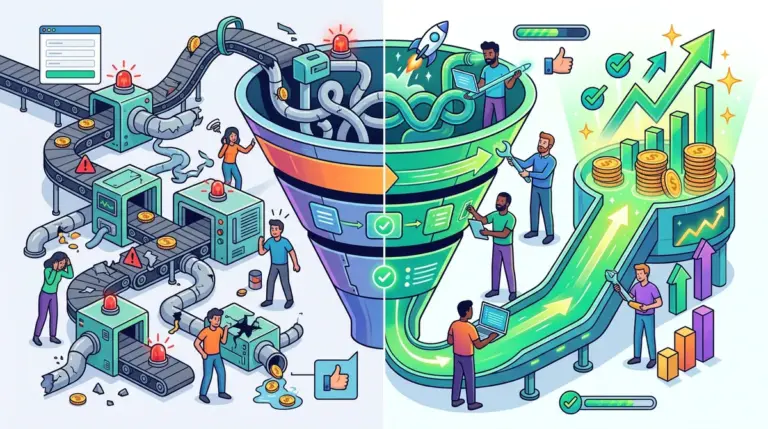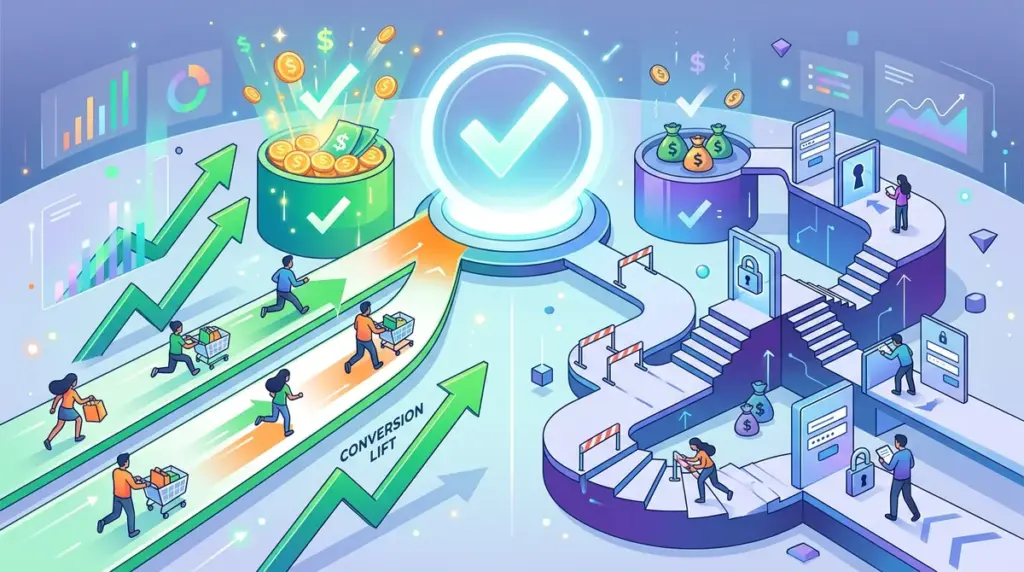
The tension between guest checkout and mandatory account creation is fundamentally a conflict between short-term conversion lift and long-term customer lifetime value (LTV). For a performance marketer, the choice isn't philosophical; it is a calculation of friction. Every additional form field or required password setup acts as a filter that removes users from your funnel. Data from the Baymard Institute consistently shows that roughly 24% of shoppers abandon their carts because the site wanted them to create an account. If your goal is immediate revenue, forcing a registration is the most effective way to sabotage your ROAS.
The Conversion Penalty of Mandatory Registration
Forced account creation creates a "wall" that stops the momentum of an impulse purchase. When a user clicks "Checkout," they are in a high-intent state. Interrupting that flow to demand a password—which must often meet specific character requirements—triggers cognitive friction. The user is no longer thinking about the product; they are thinking about their password manager or the risk of future marketing spam.
Best for: High-volume e-commerce, low-average order value (AOV) items, and first-time customer acquisition campaigns where the primary KPI is the initial transaction.
Guest checkout removes these hurdles by treating the transaction as a one-off event. By asking only for an email address and shipping details, you reduce the perceived commitment. This is particularly critical for mobile users, where toggling between a password manager and a mobile browser often leads to session timeouts or accidental tab closures.
When Account Creation Outperforms Guest Checkout
While guest checkout wins on raw conversion rates for cold traffic, there are specific business models where mandatory accounts are a strategic necessity. If your product relies on recurring revenue, personalized dashboards, or complex configurations, the "guest" experience may actually degrade the user's long-term utility.
- SaaS and Digital Subscriptions: You cannot deliver a recurring service without a persistent identity.
- High-Frequency Consumables: If a customer buys the same supplement or pet food every 30 days, the friction of re-entering credit card data every month will eventually drive them to a competitor with a "One-Click" reorder system.
- B2B Wholesale: Accounts are necessary for tax-exempt status, net-30 billing, and tiered pricing structures that aren't visible to the general public.
In these cases, the conversion "loss" at the registration stage is an intentional filter to ensure only qualified, high-value users enter the ecosystem. However, even in these scenarios, the registration should be delayed as late as possible in the funnel.
The Hybrid Solution: The Shadow Account
The most sophisticated CRO strategy today is the "Lazy Registration" or "Shadow Account" model. This approach captures all the data required for an account during the guest checkout process but does not force the user to "activate" the account until after the payment is processed.
By capturing the email address as the very first field in the guest checkout, you have already created a unique identifier. You can then use a "Thank You" page to offer a one-click account setup. Since you already have their name, email, and address, the only thing missing is a password.
Pro Tip: Instead of asking users to "Create an Account" on the confirmation page, use a value-driven prompt like "Save your details for one-click tracking and faster returns." Tests show that framing the account as a benefit rather than a requirement can yield a 30-40% registration rate among guest checkouts.
Optimizing the Guest Flow for Maximum Lift
If you opt for guest checkout, you must still optimize the form to prevent drop-offs. The goal is to make the process feel invisible. Use these specific tactics to tighten the funnel:
1. Email-First Logic: Place the email field at the very top. If the user abandons the cart at the shipping or payment stage, you at least have the lead for a cart recovery sequence. If you wait until the end to ask for an email, a bounce results in zero data.
2. Address Autocomplete: Integrate the Google Maps API or a similar service. Reducing the number of keystrokes required to enter a shipping address directly correlates with higher completion rates, especially on mobile devices.
3. Inline Validation: Do not wait for the user to click "Submit" to show errors. Use real-time validation to confirm the email format or zip code is correct. This prevents the "red text of death" that frustrates users at the end of a long form.
Technical Trade-offs: Social Logins and Passwordless Entry
Social logins (Google, Apple, Facebook) are often touted as a way to bridge the gap between guest checkout and account creation. They offer the speed of a guest checkout with the data persistence of an account. However, they come with a significant caveat: data privacy concerns. Some users are hesitant to link their social identities to a niche e-commerce site. Furthermore, if the social API fails or the user forgets which social account they used, you create a customer support nightmare.
A better alternative for many brands is "Passwordless" login. When a returning "guest" enters their email, the system sends a 6-digit magic code or a login link. This provides the security and data integrity of an account without requiring the user to manage another password. It effectively turns every guest checkout into a seamless, recurring experience.
Deploying a Test-Driven Checkout Strategy
To determine the right path for your specific brand, you should not rely on industry averages. Instead, implement a split-test on your checkout entry point. Measure the following three metrics to get a clear picture of the impact:
Conversion Rate (CR): The percentage of users who complete a purchase. Guest checkout almost always wins here.
Revenue Per Visitor (RPV): This accounts for the fact that account-holders might spend more per transaction.
Repeat Purchase Rate: Track the 90-day retention of guest buyers versus registered buyers. If your guest buyers never return, the short-term conversion lift might be costing you long-term profitability.
Start by defaulting to guest checkout but making the "Sign In" option prominent for returning users. If your data shows a high volume of returning "guests" who are manually re-entering their data, that is your signal to introduce more aggressive account incentives or a passwordless login system.
Frequently Asked Questions
Does guest checkout affect SEO or site performance?
Guest checkout itself does not impact SEO, as checkout pages are typically blocked from crawling via robots.txt. However, the speed of the checkout flow can impact your Core Web Vitals if the scripts used for address validation or social logins are poorly optimized.
Should I offer a discount for creating an account?
This is a common tactic, but use it cautiously. If you offer a 10% discount for registration, you are essentially paying for data. This is effective for high-margin products where the LTV of a registered user is significantly higher than a guest. If your margins are thin, it is often better to offer the discount in exchange for an email signup via a pop-up before they even reach the checkout.
Is guest checkout secure for high-ticket items?
Security is handled at the payment gateway level (e.g., Stripe, PayPal), not by whether the user has an account on your site. For high-ticket items, guest checkout is actually quite common, as buyers may be more concerned about their data being stored in a database that could be breached. The primary risk with guest checkout is fraud detection, which can be mitigated using third-party tools that analyze IP addresses and device fingerprints regardless of account status.