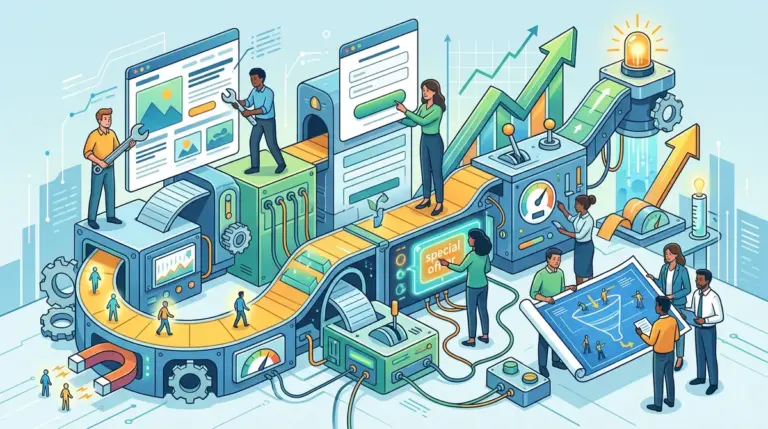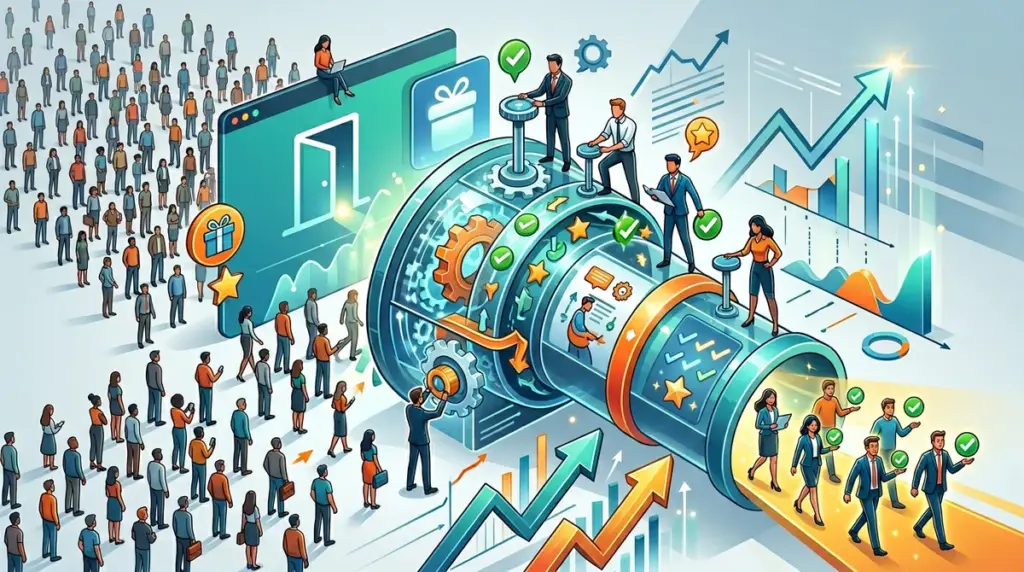
Most agency websites suffer from the "cobbler’s shoes" syndrome: they deliver high-performance campaigns for clients while their own digital storefront is a leaky bucket. If your agency is driving traffic through LinkedIn ads, SEO, or referrals but seeing a high bounce rate on your service pages, the problem isn't the traffic quality—it is the conversion architecture. For a high-ticket service provider, a lead isn't just a form submission; it is a qualified opportunity that understands your value proposition before the first discovery call.
Audit Your Primary Offer Friction
The most common conversion killer on agency sites is the "Contact Us" button. For a visitor, this represents a black hole. They don't know if they are signing up for a sales pitch, a newsletter, or a six-month waitlist. To increase lead velocity, you must replace vague calls-to-action with high-intent, low-friction offers.
Best for: Agencies with a sales cycle longer than 30 days.
Instead of a generic inquiry, offer a specific "Growth Audit," "Strategy Roadmap," or "Competitor Gap Analysis." By naming the output of the first interaction, you reduce the perceived risk of the engagement. This shift allows you to move from a passive recipient of inquiries to an active consultant. Ensure your CTA button reflects the specific benefit, such as "Get My Audit" rather than "Submit."
Pro Tip: Test a "secondary" CTA for visitors who aren't ready to book a call. A well-placed lead magnet, such as a proprietary benchmark report or a pricing calculator, can capture 3x more email addresses than a contact form alone, allowing you to nurture leads through an automated sequence.
Multi-Step Forms and Lead Qualification
Long forms are notorious for killing conversion rates, yet agencies need specific data to qualify a lead. The solution is the multi-step form. By breaking your intake process into three distinct stages, you leverage the "sunk cost" effect—once a user answers two simple questions, they are significantly more likely to finish the third, more complex step.
- Step 1: Low-Stakes Discovery. Ask for their website URL and their primary goal (e.g., "Scale Lead Gen" or "Lower CAC").
- Step 2: Qualification. Ask for their monthly budget range and current monthly revenue. This filters out "tire kickers" before they hit your CRM.
- Step 3: Contact Info. Finally, ask for their name, work email, and phone number.
Using conditional logic within these forms allows you to redirect low-budget leads to a "Resources" page or a lower-tier productized service, while high-value leads are immediately prompted to book a time on your calendar via a tool like Calendly or SavvyCal. This eliminates the back-and-forth email chain that often kills momentum.
Leveraging Micro-Copy and Social Proof Placement
Social proof is often relegated to a dedicated "Testimonials" page that no one visits. To drive conversions, you must inject proof at the exact moment of friction—usually right next to your form or CTA button. Generic praise like "They are a great partner" does not move the needle. You need specific, data-backed outcomes.
Instead of a carousel of logos, use "Proof Snippets" that highlight a 40% increase in ROAS or a 2x lift in organic traffic for a specific niche. Place these snippets directly beneath your "Book a Call" button. This reinforces the decision at the point of highest anxiety. If you are an SEO agency, show a screenshot of a specific ranking climb; if you are a CRO agency, show a heat map comparison. Visual evidence of competence is more persuasive than any sales copy.
Landing Page Architecture for Service Pages
Your service pages should function as standalone sales letters. Most agencies use a "Feature-Benefit" structure, but a high-converting agency page follows a "Problem-Agitation-Solution" (PAS) framework. Start by identifying the specific pain point your target client is feeling—such as "Stagnant lead volume despite high ad spend."
The "fold" of your page (the area visible without scrolling) must answer three questions in under five seconds: What do you do? Who do you do it for? What is the immediate next step? If your hero section is a vague image of a laptop and a headline like "We Drive Results," you are losing money. Replace it with "We help SaaS companies reduce churn through behavioral UX audits. Get your audit today."
Mobile optimization is non-negotiable. Agency owners often review their sites on 27-inch monitors, but their prospects are checking them on iPhones between meetings. Ensure your forms are easy to tap, your font sizes are legible, and your "Sticky CTA" follows the user as they scroll down the page. A persistent "Book Now" button at the bottom of the mobile screen can increase conversion rates by up to 15%.
Technical Tracking Beyond the Surface
You cannot optimize what you do not measure. Standard GA4 tracking is insufficient for deep CRO. You need to implement event tracking for every interaction: scroll depth, video plays, and form field abandonment. If 70% of your users drop off at the "Budget" question on your form, you know that either your traffic is unqualified or your budget tiers are intimidating.
Use session recording tools to watch how users navigate your site. You will often find that users are clicking on elements they think are links, or they are scrolling past your most important case studies because they look like banner ads. These "rage clicks" and navigation errors are the low-hanging fruit of conversion optimization. Fix the technical friction first, then move on to testing headlines and offers.
Immediate Steps to Increase Lead Velocity
To turn your agency site into a lead-generation machine, stop treating it like a portfolio and start treating it like a performance funnel. Execution should prioritize the following actions in order of impact:
- Replace the "Contact" link in your header with a high-contrast button for your primary offer.
- Implement a multi-step form to qualify leads by budget and industry before they reach your inbox.
- Add a "Results" section to every service page featuring specific percentages and dollar amounts, not just logos.
- Install a calendar booking widget on your "Thank You" page to secure the discovery call immediately after the form is submitted.
- Review your mobile site speed; a one-second delay in load time can result in a 7% reduction in conversions.
Frequently Asked Questions
Should I put my pricing on my agency website?
If you have a productized service or clear packages, yes. Transparency builds trust and disqualifies leads who cannot afford you. If you are a bespoke enterprise agency, use "Starting at" pricing or a budget dropdown in your form to set expectations without pigeonholing your quotes.
How many testimonials do I need to see a conversion lift?
Quality beats quantity. Three specific, data-driven case studies are more effective than twenty generic quotes. Focus on testimonials that address specific objections, such as "I was worried about the onboarding time, but they had us live in 10 days."
Does live chat help or hurt agency conversions?
Live chat can increase conversions if it is staffed by a human who can answer technical questions. If it is a generic bot that just asks for an email address, it often adds unnecessary friction. Use chat for high-traffic service pages only if you can respond within two minutes.
What is a "good" conversion rate for an agency site?
While it varies by niche, a healthy conversion rate for a high-intent service page is typically between 2% and 5%. If you are below 1%, you likely have a disconnect between your traffic source and your landing page offer.