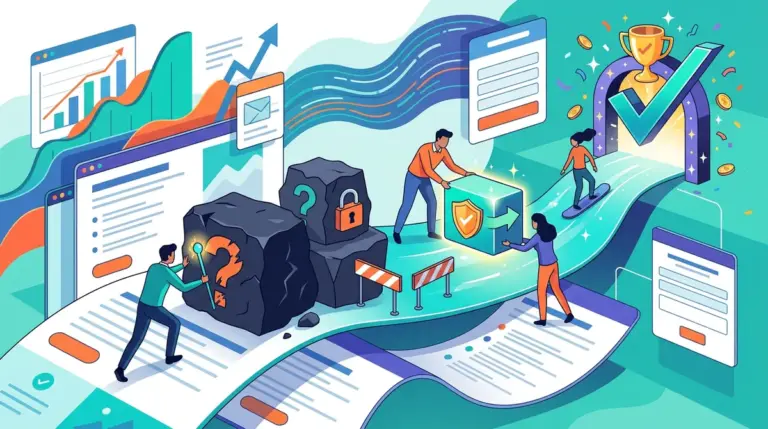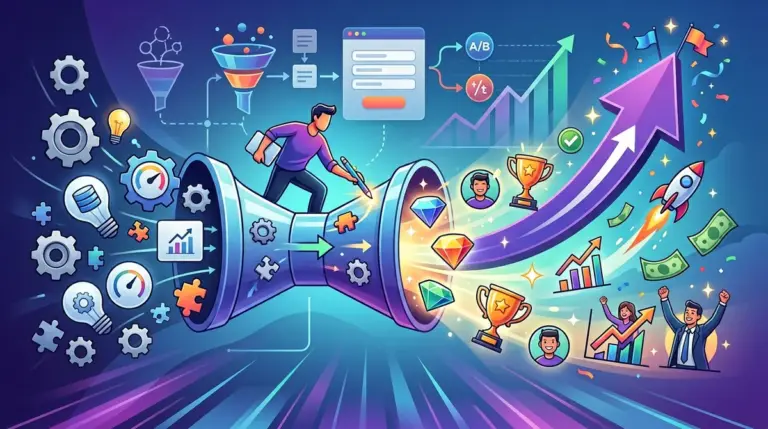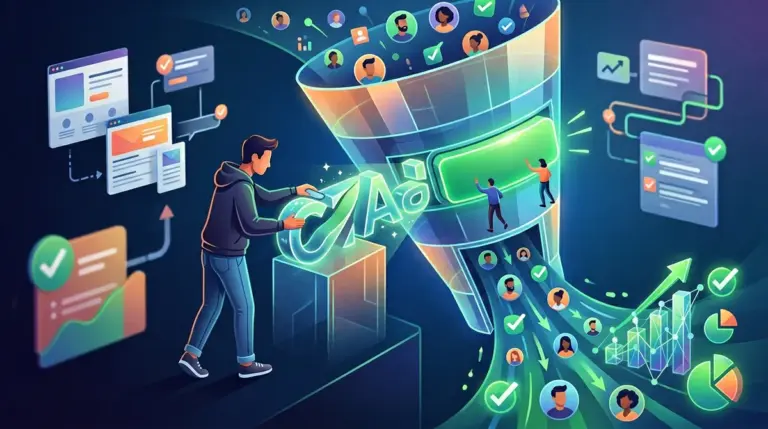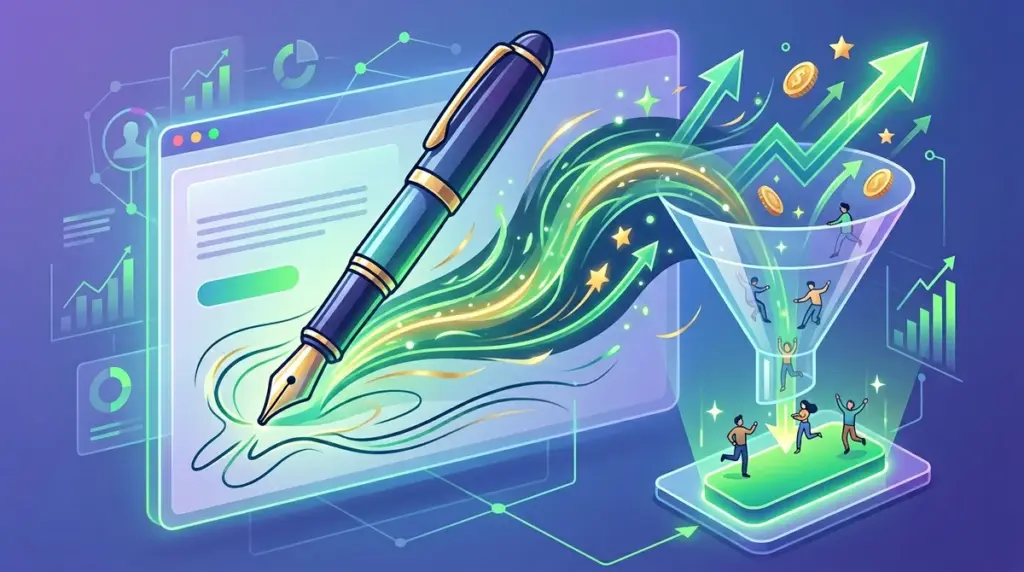
Most website copy fails because it attempts to explain a product rather than solve a specific problem. When a visitor lands on your page, they are not looking for a list of features; they are looking for a bridge between their current pain point and a desired future state. To write copy that converts, you must stop acting like a technical documentarian and start acting like a direct-response strategist. High-converting copy is a sales sequence in text form, engineered to remove friction and amplify the value of the offer.
Lead with the Primary Outcome, Not the Process
The hero section is the most expensive real estate on your site. If your headline describes what you do (e.g., "We provide cloud-based accounting software"), you are wasting the visitor's attention. Instead, lead with the primary outcome the user achieves by using your solution. For a B2B SaaS tool, this might be "Close your month-end books in 4 hours, not 4 days."
The Hero Section Formula
A high-performing hero section requires three distinct elements working in tandem. First, a headline that identifies the core benefit. Second, a subheadline that explains how the benefit is delivered while neutralizing the biggest objection. Third, a primary call to action (CTA) that uses "get" language rather than "submit" language. For example, "Get My Free Audit" consistently outperforms "Contact Us" because it promises an immediate, tangible takeaway.
Engineering Trust Through Specificity
Vague claims are the enemy of conversion. Phrases like "world-class service," "innovative solutions," or "industry-leading results" are invisible to modern consumers. They are filler words that signal a lack of concrete value. To build authority, you must replace every adjective with a verifiable data point.
Warning: Avoid "false urgency" or "fake scarcity" in your copy. Savvy buyers recognize countdown timers that reset on refresh. Instead, use real constraints, such as limited onboarding slots for a service or a fixed expiration for a bonus offer, to drive action without eroding brand integrity.
Replacing Adjectives with Data
If you claim your software is "fast," your conversion rate will likely stagnate. If you state that your software "reduces server response time by 240ms for high-traffic e-commerce stores," you provide a concrete reason for a CTO to care. Specificity creates a mental image of the result, making the offer feel more attainable and less like a marketing pitch.
Architecting the Conversion Path
Conversion-centric copy follows a logical progression of thought. You cannot ask for a sale or a high-intent lead before you have established the "why." This requires a structured flow that mirrors a natural sales conversation.
- The Problem Agitation: Briefly remind the reader why their current situation is unsustainable. Use specific symptoms they experience daily.
- The Solution Introduction: Introduce your product as the mechanism that solves those symptoms.
- Social Proof as Evidence: Use testimonials that mention specific results. "They helped us grow" is weak. "They increased our trial-to-paid conversion by 18% in three months" is a conversion asset.
- Objection Handling: Address the price, the implementation time, or the learning curve directly in the copy. Don't wait for them to ask.
- The Risk Reversal: Use guarantees, free trials, or "no-contract" language to lower the barrier to entry.
Frictionless Form Copy
The copy surrounding your forms is just as critical as the headline. Instead of "Fill out this form," use "Tell us where to send your customized growth plan." Micro-copy—the small bits of text under form fields or on buttons—should be used to reassure the user. Adding a line like "We hate spam as much as you do; your email is safe with us" can reduce form abandonment by addressing a primary privacy concern at the exact moment it arises.
The Psychology of the Call to Action
The CTA is the final hurdle. Many marketers default to generic commands like "Buy Now" or "Sign Up." To maximize lift, the CTA should reflect the user's intent. If the page is about a free trial, the button should say "Start My 14-Day Free Trial." If the page is for a high-ticket consulting offer, the button should say "Check Availability for a Strategy Session."
Best for: High-intent landing pages where the goal is a specific lead action. Use "Value-Based CTAs" that complete the sentence "I want to..." from the user's perspective.
Audit Your Copy for These Conversion Killers
Before publishing any page, run a "friction audit." Look for "we-centric" language. If the word "we" or "our" appears more often than "you" or "your," the copy is misaligned. High-converting copy is obsessively focused on the reader. Another common killer is the "wall of text." Break up your copy into short paragraphs of 2-3 sentences. Use bullet points to make technical details skimmable. If a visitor cannot understand the core value of the page within five seconds of scanning, the copy has failed.
Deploy and Iterate Based on Behavior
The final stage of writing copy that converts is recognizing that the first draft is a hypothesis. Use heatmaps to see where users stop reading and scroll maps to identify where they drop off. If users are clicking away at a specific section, the copy there is likely too dense or irrelevant. Conversion rate optimization is an ongoing process of refining the message based on how real users interact with the words on the screen. Move from drafting to deployment quickly, then let the data dictate your next rewrite.
Frequently Asked Questions
How long should a landing page be?
The length of your copy should be proportional to the "ask." A free newsletter signup requires very little copy, while a $5,000 software implementation requires long-form copy to address every possible objection and technical requirement.
Should I use humor in my sales copy?
Humor can build rapport, but it should never come at the expense of clarity. If a joke obscures the value proposition or makes the offer feel less professional, cut it. Clarity always converts better than cleverness.
What is the best way to handle pricing in copy?
Transparency usually wins. If you hide the price, you force the user to do extra work, which increases friction. If you have a complex pricing model, provide a "starting at" price or a calculator to give the user a baseline expectation before they commit to a call.